
How to Test Liquid Culture
- Harold Evans
- Feb 25
- 2 min read
Updated: Mar 7
Before you inoculate grain, test your liquid culture on agar. Clear liquid does not mean clean liquid. The only reliable way to confirm sterility is to grow it out.
This process takes less than five minutes and can save weeks of work.
Why You Should Always Test Liquid Culture
Liquid culture can look perfect in the syringe and still contain contamination.
Testing on agar allows you to:
Confirm sterility before using grain
Detect bacteria early
Observe growth characteristics
Protect your time and materials
One agar plate can save multiple grain bags.
What You’ll Need
1 sterile agar plate (MEA works well)
Your liquid culture syringe with cap (no needle attached)
Still air box or flow hood
Parafilm or plate wrap
For this procedure, do not use a needle.
Step-by-Step: How to Test Liquid Culture
Work in a Clean Environment
Perform this inside a still air box or in front of a flow hood.
Remove the cap from the syringe. Do not attach a needle.
Open the Agar Plate
Lift the lid just enough to access the agar surface.
Minimize exposure time. Work deliberately and efficiently.

Use the Drop Method
This is the most important part.
Do not squirt liquid culture into the plate. A stream of liquid creates pooling and can run to the edges, making growth difficult to interpret.
Instead:
Hold the syringe body between your thumb and index finger
Gently squeeze the barrel
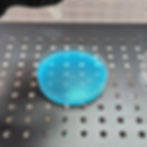
Allow a single drop to fall onto the agar
You may need to squeeze harder than expected. That’s normal.
Place three drops in a small triangle or short line across the plate.
This gives you multiple growth points without flooding the surface.

Recover the Plate
Immediately replace the lid.
You now have two options:
Option A: Seal Immediately - Wrap the plate and keep it level to prevent liquid from running.
Option B: Let It Rest for 5 Minutes - Allow the plate to sit undisturbed with the lid on for about five minutes.
During this time, the liquid begins absorbing into the agar. Afterward, the drops are far less likely to move when tilted.
This small pause keeps plates clean and readable.
Incubation Timeline
Store plates at room temperature (70–75°F / 21–24°C).
Wait 3–5 days for results.
3 days is usually enough for contamination to reveal itself.
5 days if you prefer extra caution.
In most cases, 3 days is sufficient.
What Clean Growth Looks Like
A clean liquid culture will produce:
Even, radial mycelial expansion
No cloudy bacterial halos
No slimy patches
No unexpected colors
If the plate shows clean, healthy growth with no contamination, your LC is safe to use.
If contamination appears, discard the culture and troubleshoot before inoculating grain.
Why the Drop Method Matters
Large liquid pools:
Spread contaminants more easily
Obscure early bacterial growth
Increase the risk of liquid reaching the plate edge
Controlled droplets keep growth localized and easy to read.
Simple. Repeatable. Reliable.
Final Thoughts
Testing liquid culture is a non-negotiable quality control step in mushroom cultivation.
Three drops. Three days. Clear answer.
Ready to start testing your cultures? Grab a stack of MEA plates to ensure your cultures are clean.