
Shiitake Mushroom: Nutrition, the Compounds, and Why It Earns Its Place in the Kitchen

Updated: Jul 21

Lentinula edodes is the second most cultivated mushroom in the world and arguably the most culinarily serious fungus you can buy at a grocery store. The deep umami, the meaty texture, the way the caps crisp at the edges in a hot pan: shiitake earned its global kitchen presence on flavor alone. Everything else is a substantial bonus.
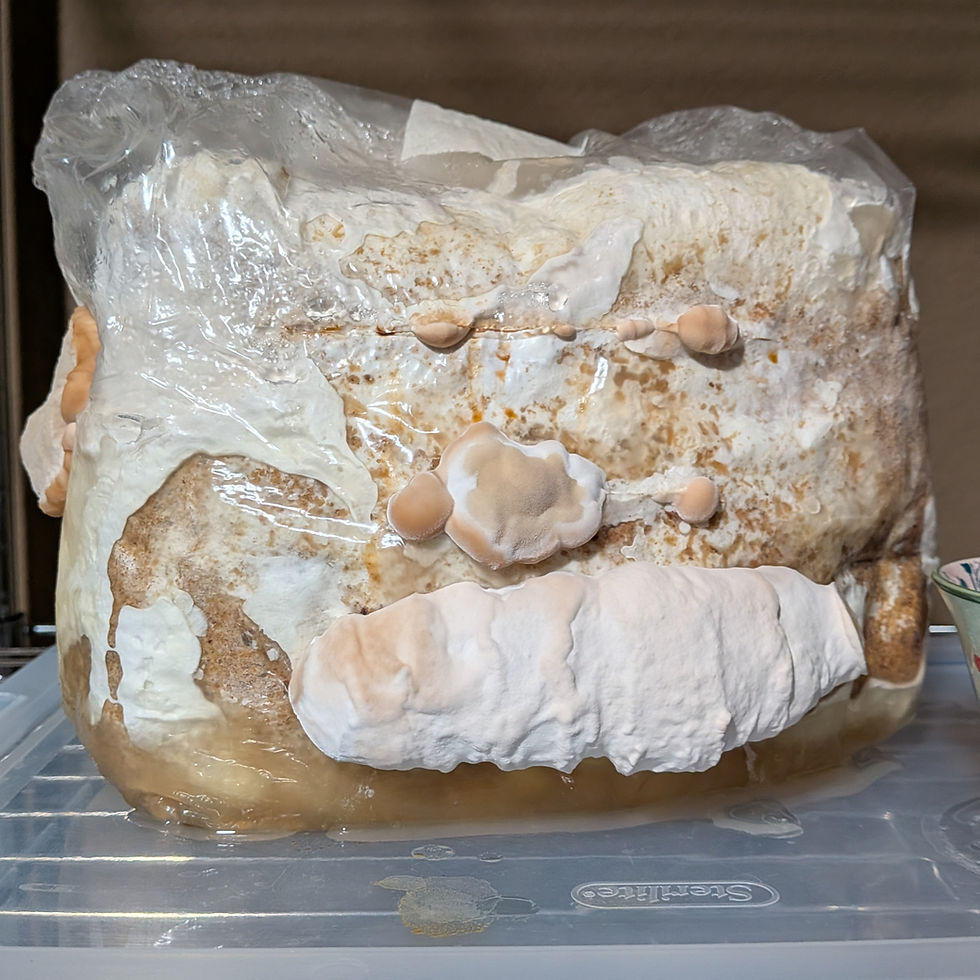
It's also my personal favorite culinary mushroom, which is exactly why I don't grow it. Shiitake takes months to produce properly, requires significant substrate preparation and dedicated space, and is best served by the large-scale American growers who have the infrastructure to do it right. Buying from them means getting a better product than I could offer at my scale, and it means not stepping on the toes of specialists who've perfected it. That's the honest answer.
What the Research Examines
Lentinan and Immune Research
Shiitake contains lentinan, a beta-(1,3/1,6) glucan studied specifically for immune-modulating activity. A study in the Journal of the American College of Nutrition measured immune markers and inflammatory markers in healthy adults consuming cooked shiitake daily over an eight-week period (1). Additional research has examined lentinan's effect on macrophage and T-cell activity (2). Notably, this is one of the few functional mushroom immune studies conducted on whole cooked mushroom rather than an isolated extract, which makes it directly relevant to ordinary dietary consumption.
Eritadenine and Lipid Research
Shiitake contains eritadenine, a compound largely unique to this species that has been studied for its effect on how the body processes lipids. Research has examined eritadenine in the context of lipid metabolism and cholesterol and triglyceride markers (3, 4). The mechanism studied is distinct from the beta-glucan cholesterol pathway examined in oyster mushrooms, which is part of why shiitake and oyster are studied as complementary rather than redundant. As with lentinan, some of this research looks at dietary consumption rather than concentrated supplementation.
Antioxidant Research
Shiitake contains selenium, phenolic compounds, and polysaccharides studied collectively for antioxidant activity. Research in Food Chemistry measured its free-radical-scavenging capacity and its activity against oxidative cell damage (5). The research interest here is in upstream oxidative processes rather than any single measured endpoint.
A Compound Worth Knowing: Kojic Acid
Shiitake contains kojic acid, a naturally occurring compound studied extensively for its antioxidant and skin-brightening properties (6). This is less a wellness note than a genuinely interesting piece of trivia: the same mushroom you're cooking with for its flavor also happens to produce a compound the cosmetics industry pays a great deal to synthesize. It's a good illustration of how much chemistry is packed into a common culinary mushroom.
A Note on History
Shiitake has been cultivated in East Asia since at least the 12th century, making it one of the oldest intentionally cultivated fungi in human history. In China it was called Xiang Gu, the fragrant mushroom, and valued in Traditional Chinese Medicine for supporting Qi and circulation. In Japan the name references its host tree, the shii, and the mushroom has been a cornerstone of both cuisine and herbal practice for centuries. That convergence of culinary and traditional use in a single species is part of what makes shiitake worth understanding beyond the flavor.
In the Kitchen
Shiitake rewards high heat. The caps develop a deep, savory crust when sautéed in butter or oil with enough space in the pan to brown rather than steam. They hold up well in braises, soups, and stir-fries, and the dried form concentrates the umami significantly, worth rehydrating and using the soaking liquid as a base. The stems are tough and fibrous and don't soften meaningfully with cooking; save them for broth.
Fresh shiitake from a quality domestic grower is what you want. There are excellent American producers working at scale on oak logs and supplemented sawdust blocks who turn out consistently high-quality fruiting bodies. Look for firm, dry caps without dark spots or sliminess, and stems that snap clean rather than bend.
For a preparation more concentrated than culinary quantities, a dual-extracted tincture or standardized powder captures lentinan and other compounds at higher levels. Both the culinary and supplemental approaches have their place and aren't mutually exclusive.
References
Dai, X. et al. (2015). Journal of the American College of Nutrition, 34(6), 478–487.
Wasser, S.P. (2011). International Journal of Medicinal Mushrooms, 13(4), 363–376.
Kaneda, T. et al. (1970). Experimental and Toxicologic Pathology, 22(2), 85–94.
Enman, J. et al. (2008). Journal of Nutritional Biochemistry, 19(7), 494–502.
Gao, W. et al. (2013). Food Chemistry, 138(2-3), 2029–2036.
Saeedi, M. et al. (2019). Pharmaceuticals, 12(2), 92.


Comments